

Comprehensive home warranty: every system and appliance, one plan
A comprehensive home warranty bundles the heating, cooling, plumbing and electrical systems together with the kitchen and laundry appliances into a single service contract. Here is what that actually includes in the US, what it costs, and what it still leaves out.
- Systems + appliances in one contract
- One service fee per visit
- Add-ons available
What is a comprehensive home warranty?
Most providers sell coverage in layers: a systems-only plan, an appliances-only plan, and a comprehensive plan that includes both. The comprehensive tier is the widest one — when a covered system or appliance stops working through normal use, you file one claim, pay one flat service fee, and the provider dispatches a technician from its network.
It is a service contract, not insurance — it responds to wear and age, not to fire, theft or storms.
One contract means one phone number, one service fee and one renewal date instead of juggling two plans.
Coverage still has limits: a cap per item, an annual aggregate cap, and a list of exclusions.

What a comprehensive plan covers
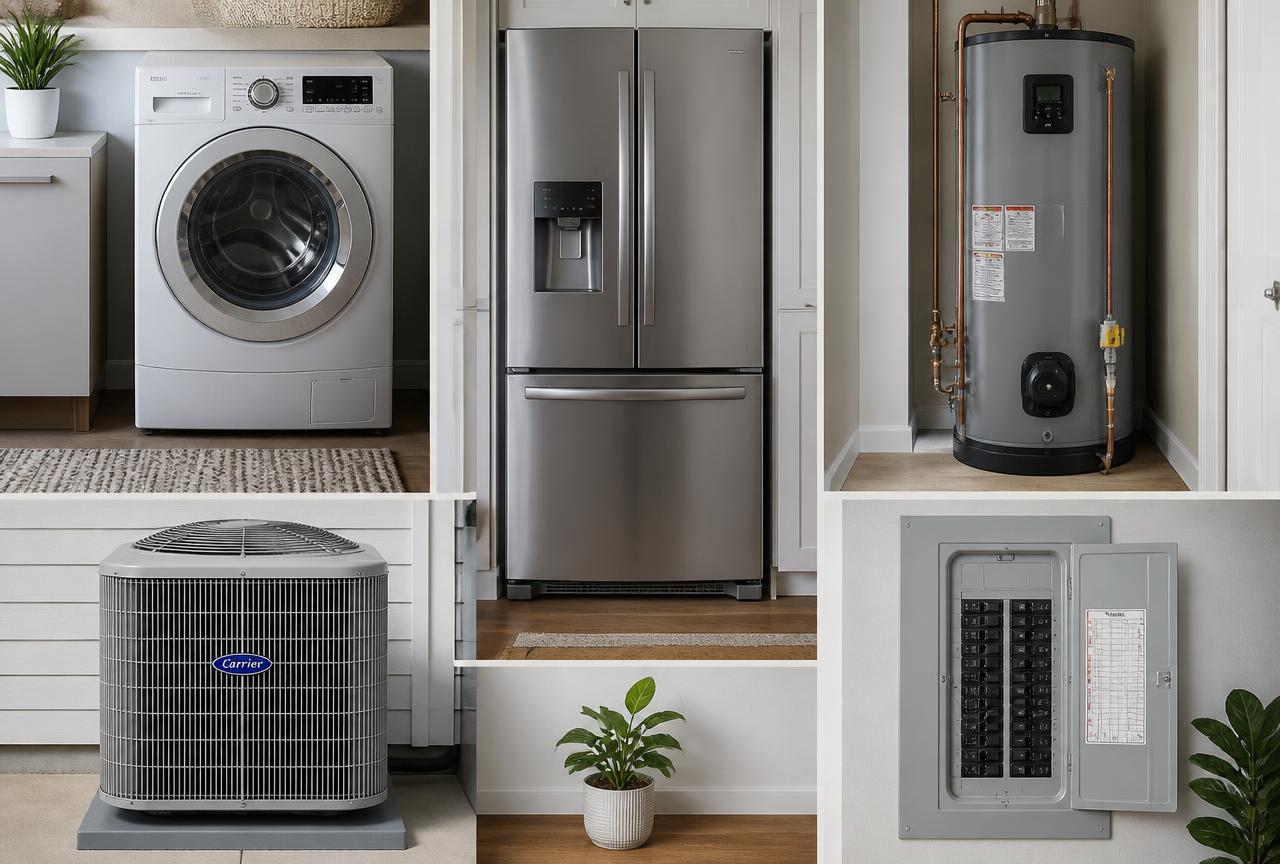
The two halves of a comprehensive contract — the systems that keep the house running, and the appliances you use every day.
Home systems
Heating system
Furnace, boiler, heat pump — the unit that keeps the house warm in winter.
Air conditioning
Central AC condenser, compressor and the thermostat that controls it.
Plumbing system
Pipes, stoppages, faucets, valves, sump pump and water heater.
Electrical system
Wiring, panel, breakers, switches, doorbell and garage door opener.

Major appliances
Refrigerator & freezer
The most-filed appliance claim in most US homes.
Oven, range & cooktop
Gas and electric, including built-in units.
Dishwasher
Pump, motor, control board and heating element.
Washer & dryer
Usually included in a full plan; rarely in a systems-only plan.
Garbage disposal
Motor jams and resets — a very common, cheap-to-fix call.
Built-in microwave
Countertop models are almost never covered; built-in usually is.


Comprehensive vs. systems-only vs. appliances-only
The difference is scope, not quality of service. Use this to decide whether one wide plan beats two narrower ones.
| Systems-only | Appliances-only | Comprehensive | |
|---|---|---|---|
| What it covers | Major systems only — heating, AC, plumbing, electrical. | Appliances only — fridge, oven, dishwasher, washer/dryer. | Both major systems and major appliances in one contract. |
| Typical monthly cost | Lowest tier of the three. | Mid tier — often close to systems-only. | Highest of the three, but cheaper than buying two separate plans. |
| Service fee per visit | Flat fee chosen at checkout, same idea across all tiers. | Flat fee chosen at checkout, same idea across all tiers. | One flat fee per visit — including when two items fail at once. |
| Best suited to | Newer homes where appliances are still under manufacturer warranty. | Owners who only want the kitchen and laundry protected. | Older homes, first-time buyers, landlords and anyone who wants one contract to manage. |
| Add-ons available | Pool, spa, well, septic, roof leak, sprinkler. | Pool, spa, well, septic, roof leak, sprinkler. | The full add-on menu, usually at the best bundled price. |
Plans, pricing and availability are set by each provider and vary by state. Confirm current terms for your ZIP code before you buy.
What it still does not cover
“Comprehensive” describes the scope of items on the plan, not an unlimited promise. These are the exclusions that cause most denied claims in US homes — read them before you sign.
- Pre-existing conditions — anything that was already broken or known before the contract started.
- Code-upgrade costs: if a repair requires bringing a system up to current building code, that difference is usually on you.
- Permits, haul-away of an old unit, refrigerant recharge and access work such as cutting walls.
- Cosmetic parts: panels, knobs, racks, filters and glass.
- Items not maintained — a technician can deny a claim if there is no service record on an HVAC unit.
- Manufactured or mobile homes, and homes not used as a primary or seasonal residence, unless the plan allows it.
- Storm, fire, flood and other sudden damage — that is homeowners insurance, not a warranty.

Add-ons worth adding
Even the widest base plan leaves out some of the priciest equipment on a lot. These optional riders are the ones US homeowners add most often.
What drives the price
A comprehensive plan is the widest tier, so it costs more than a narrow one. Four things move the number.
Where you live
Labor rates and provider availability differ state to state, and a few states are not served at all.
What you cover
A full plan costs more than a systems-only plan, and every add-on adds a small monthly amount.
Your service fee
Choosing a higher per-visit fee usually lowers the monthly premium, and the reverse is also true.
Term length
Paying for 12 months up front is normally cheaper per month than paying monthly.
Who a comprehensive plan makes sense for
- Your home is 10+ years old and the original systems are past their expected life.
- You are a first-time buyer with little cash set aside for a surprise four-figure repair.
- You rent the property out and want predictable maintenance costs between tenants.
- You do not want to interview contractors at 9pm when the heat stops working.
- You already pay for two narrower plans and would rather consolidate into one contract.
If your home is new-build with appliances still under manufacturer warranty, a narrower plan usually costs less and covers the same real risk.



Comprehensive home warranty: common questions
What is a comprehensive home warranty?
A comprehensive home warranty is a service contract that covers both the major systems of a home (heating, air conditioning, plumbing, electrical) and the major appliances (refrigerator, oven, dishwasher, washer and dryer) under one agreement, instead of selling those two groups as separate plans.
Is a comprehensive home warranty the same as homeowners insurance?
No. Homeowners insurance pays for sudden damage such as fire, theft or storm. A comprehensive warranty pays for repair or replacement of covered items that break down from normal wear and age.
What does a comprehensive plan usually cost?
Pricing depends on your state, the items you cover and the service fee you choose. You pay a monthly premium plus a flat service fee each time a technician is dispatched.
Does a comprehensive warranty cover everything in the house?
No. Even the widest plan excludes pre-existing conditions, code-upgrade costs, permits, refrigerant, cosmetic parts and items without maintenance records, and it caps payout per item and per year.
How long before a comprehensive plan starts working?
Most contracts have a waiting period of about 30 days before you can file a claim, so it is worth starting one before something breaks rather than after.
Want the full details of a comprehensive plan?
Open the plan page to see current coverage, pricing and add-ons for your home.
Advertising disclosure: we may earn a commission if you purchase through links on this page, at no extra cost to you. Coverage, limits, exclusions and availability are set by the provider and vary by state.
Read the full plan page here: Comprehensive